José Carlos Fontanesi Kling
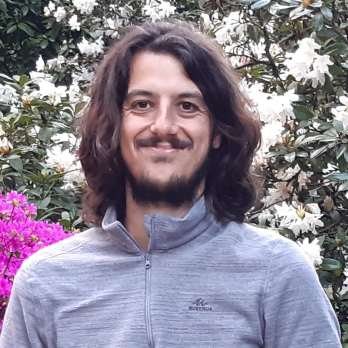
Mathematician/Programmer
About me
PhD in Applied Mathematics with solid academic background from the University of São Paulo (USP) and Kiel University (CAU), combined with programming knowledge and interest for logical and mathematical problems.
Having worked as a researcher at GEOMAR Helmholzt Centre for Ocean Research Kiel granted me the ability to work in highly interdisciplinary and international environments, in addition to capacity to communicate complex concepts both orally and in writing.
If you prefer, you can check out my CV in PDF format (English and Portuguese).
Experience
- May 2025 - July 2025 - Researcher at GEOMAR RD4.
Ash layers from volcanic eruptions can be found on land or in sediments retrieved from the ocean floor. For on land layers it is usually possible to determine which volcano is its source, while for the ones in ocean sediments multiple nearby volcanoes could be the source. This project aims to apply machine learning models to determine the source volcanoes of ash layers based on their chemical composition, using the data from on land samples as the ground truth.
- Nov 2021 - Apr 2025 - PhD researcher at GEOMAR RD4 and University of Kiel
Supervisors: Julie Christin Schndlbeck-Belo and Mathias Vetter
Project: Links between climate and volcanism
This project originated from observations of coincidences between glacial/interglacial periods and volcanism. Some works detected an increase in eruption rate following the last glacial age (Watt et. al (2013), Praetorius et al. (2016)), while others observed coincidences in the periodicities present in climate records (the δ¹⁸O benthic stack compiled in Lisiecki and Raymo (2005)) and volcanism (Schindlbeck et. al (2018), Kutterolf et. al (2013)).
Analysing this data, however, is not so straightforward. While climate proxies are standard continuous time series, eruption records are points in time that can be represented as a binary time series, with ones representing instants when an event occurred. My goal in this project is to research and develop statistical tools to help determine if there is a correlation between climate and volcanism.
During this research we realized that a statiscally sound goodness-of-fit test for point processes was lacking in the literature, therefore we developed the theory and implemented such a procedure to be used in out analyses.
For more on this, check this paper, the Julia package with the implementation of the goodness-of-fit test, and the posters available below.
The project PointProcesses.jl is an improved and more general purpose package for temporal and marked point processes that is in active development with in collaboration with other researchers.
Education
- 2021 - 2025 - PhD in Applied Mathematics (CAU - Kiel / GEOMAR)
- 2018 - 2020 - MSc in Mathematics (ICMC-USP)
- 2014 - 2017 - BA in Mathematics (ICMC-USP)
Publications
- 2025 - Facies Characterization and Volcanic Source Assignment of Marine Tephra Deposits Around São Miguel Island, Azores Archipelago
- 2025 - On goodness-of-fit testing for self-exciting point processes
- 2025 - Variations in Event-Bed Thickness-Frequency Distributions Near Volcanic Islands: Indicators of Varied Geological Processes
- 2024 - PointProcessTools.jl (Software)
- 2023 - Point Process Tools (Software)
- 2022 - Timing And Recurrence Intervals For Major Eruptions From Amatitlán Caldera (Guatemala)
Academic events
- 2023 - American Geophysical Union Congress. “A new test for the analysis of volcanic activity over time” (Poster)
- 2023 - International Union for Quaternary Research congress. “A New Statistical Test for Volcanic Activity Variability on a 1.1 Myr Tephra from the NW Pacific” (Slides)
- 2023 - Physics of Volcanoes (PoV). Talk “A New Statistical Test for Volcanic Activity Variability” (Slides)
- 2020 - Winter School in Abstract Analysis. Talk “A topological game on the space of ultrafilters” (Slides)
- 2018 - International Congress of Mathematicians (ICM). Attendance.
Scholarships
- 2018 - 2020 - FAPESP Master studies scholarship
Supervisor: Leandro Fiorini Aurichi
Project: Applications of ultrafilters to Ergodic Ramsey Theory (in Portuguese)
- 2015 - 2017 - FAPESP Scientific initiation scholarship
Supervisor: Leandro Fiorini Aurichi
Project: Introduction to Topological Games
Teaching
- 2019 - Introduction to Game Theory (16 hours)
- 2018 - Minicourse in topology (16 hours)
Awards
- Academic highlight - Highest grades among the class (2014/2015/2016/2017)
Presentations
- 2016 - Anjos e demônios (in Portuguese)
- 2015 - A torre de cartas de Pisa (in Portuguese)
Skills
- Julia
- Python
- Git
- SQL
- MATLAB
- Bash
Languages
- Portuguese (Native)
- English (Fluent)
- Spanish (Advanced)
- German (Advanced)
- Italian (Intermediate)